How to Read a Return Policy Before You Buy
Most people only read a return policy after something goes wrong: the shoes do not fit, the blender arrives with a cracked jar, or the gift was a duplicate. By then, the details that decide whether you get your money back, how much it costs you and how long you have are already set. A two-minute read before you click buy can save you a frustrating refund fight later.
This guide shows you how to read a return policy quickly and thoroughly. You will learn which sections matter most, the phrases that signal a costly or restrictive policy, how to compare two retailers side by side, and what to save at checkout so a future return goes smoothly.
Where to find the return policy
Return policies are not always where you expect. Check these places before you buy:
- The product page. Some items have their own return rules listed near the price or in a details tab, especially electronics, mattresses, furniture and personalized goods.
- The site footer. Most retailers link to a “Returns,” “Returns and Exchanges” or “Shipping and Returns” page at the bottom of every page.
- The checkout page. Some sites show a summary of return terms during checkout, which can differ for sale or clearance items.
- Marketplace seller pages. On marketplaces, an individual seller may have its own policy separate from the platform’s general rules.
If you cannot find a return policy at all, treat that as a warning sign, particularly for expensive purchases.
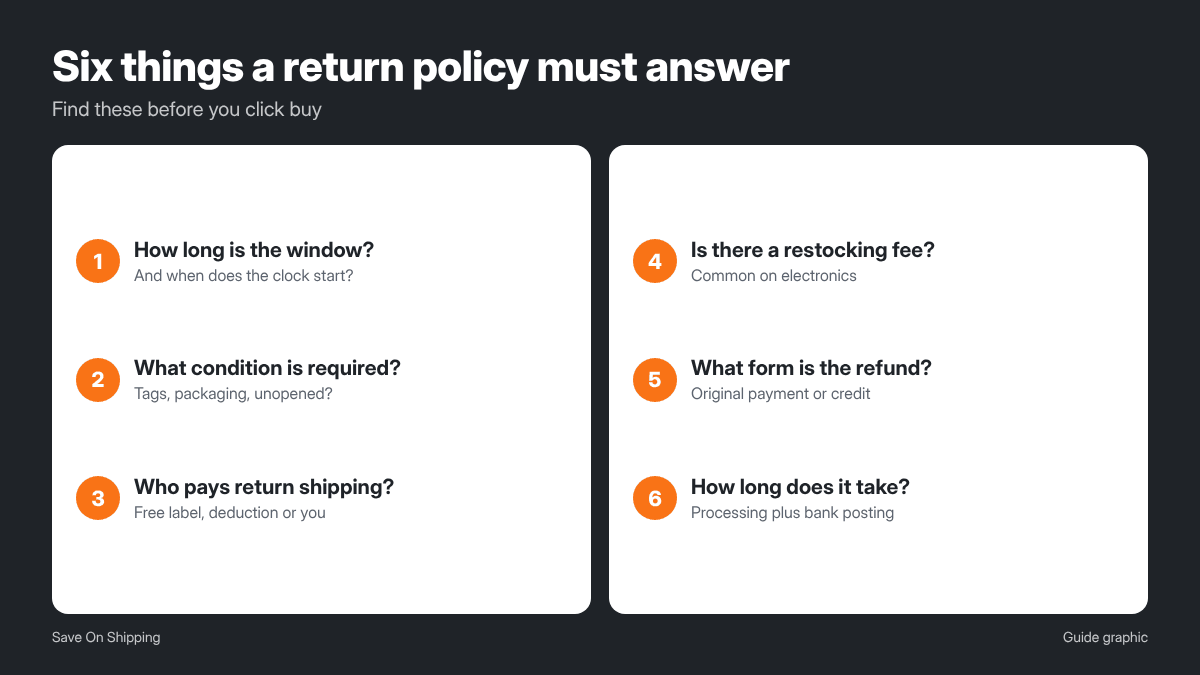
The six things every return policy should answer
1. How long is the return window?
Look for the number of days and, just as important, when the clock starts. Some policies count from the order date, others from the delivery date. A 30-day window from the order date can be much shorter in practice if shipping takes a week.
2. What condition must the item be in?
Many retailers require items to be unused, unwashed, with tags attached and in the original packaging. Others accept opened or lightly used items. Read this closely for clothing, cosmetics, electronics and anything sealed.
3. Who pays for return shipping?
Some retailers provide a free prepaid label. Others deduct a return shipping cost from your refund or ask you to pay for your own label. Some offer free returns in store but charge for mail-in returns.
4. Is there a restocking fee?
A restocking fee is a percentage or set amount deducted from your refund to cover the cost of processing the return. It is most common on electronics, large items and special orders. The policy should say when it applies.
5. What form does the refund take?
The policy should say whether you get your money back to the original payment method, store credit, a gift card or only an exchange. “Refund” and “store credit” are very different outcomes.
6. How long does the refund take?
Look for the processing time after the retailer receives your return, plus a note on how long your bank or card issuer may take to post it.
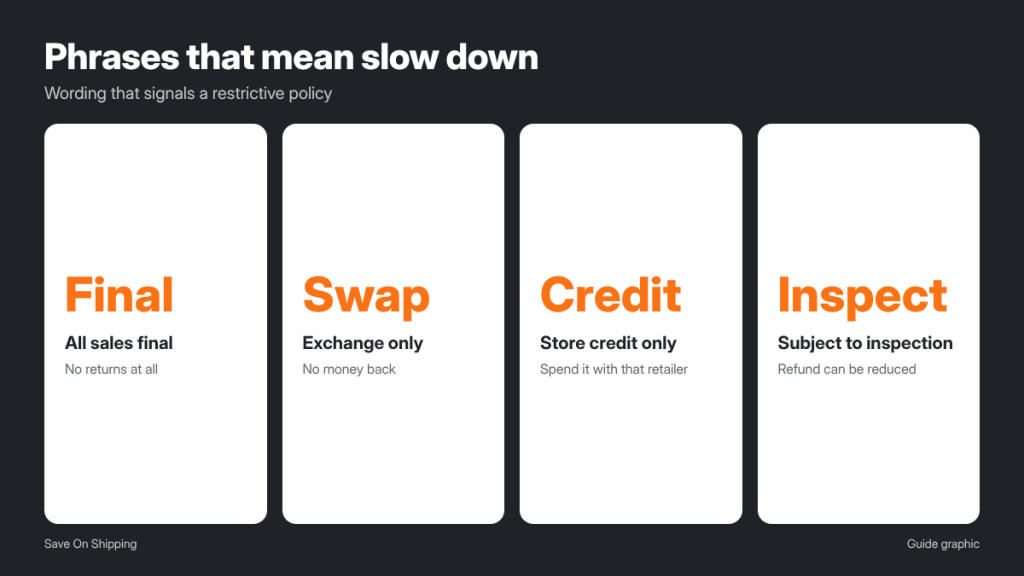
Phrases that signal a restrictive policy
Certain wording should make you slow down and read carefully:
- “Final sale” or “all sales final”: the item cannot be returned at all.
- “Exchange only”: you can swap for another item but not get your money back.
- “Store credit only”: your refund will be credit you must spend with that retailer.
- “Must be in original, unopened packaging”: opening the box may end your right to return.
- “Subject to inspection”: the retailer can reduce or refuse a refund after examining the item.
- “Return shipping is the customer’s responsibility”: you will pay to send it back.
- “Returns must be initiated within”: you have to start the return online by a deadline, which may be earlier than when the item must arrive back.
Item types with special rules
Many retailers apply separate policies to certain categories. Check for these:
- Electronics: shorter windows, restocking fees for opened items and requirements to include all accessories.
- Mattresses and furniture: trial periods, pickup fees or requirements to keep the item for a minimum time.
- Personalized or custom items: often non-returnable unless defective.
- Swimwear, underwear and cosmetics: often non-returnable once opened for hygiene reasons.
- Large or heavy items: may need a scheduled pickup or freight return, sometimes at your cost.
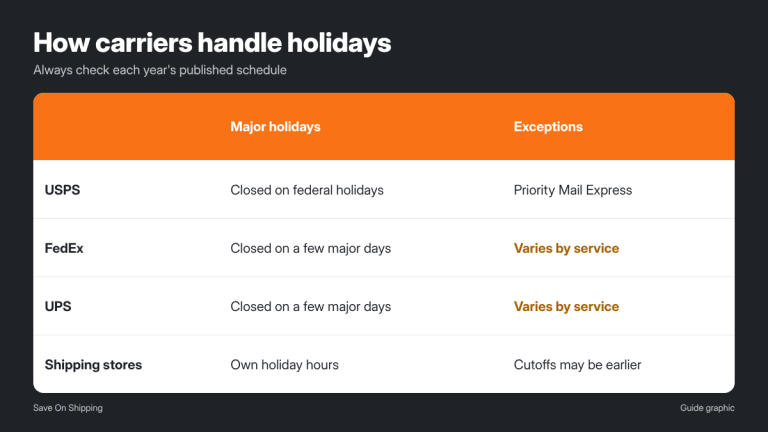
- Holiday purchases: many retailers extend return windows for items bought during the holiday season, but the extended dates are usually listed separately.
How to compare two retailers’ policies
When the same item is sold by two stores at similar prices, the return policy can be the deciding factor. Compare them on the same points:
- Return window length and start date.
- Condition requirements.
- Return shipping cost and drop-off options.
- Restocking fees.
- Refund type: original payment or store credit.
- Refund processing time.
Worked example
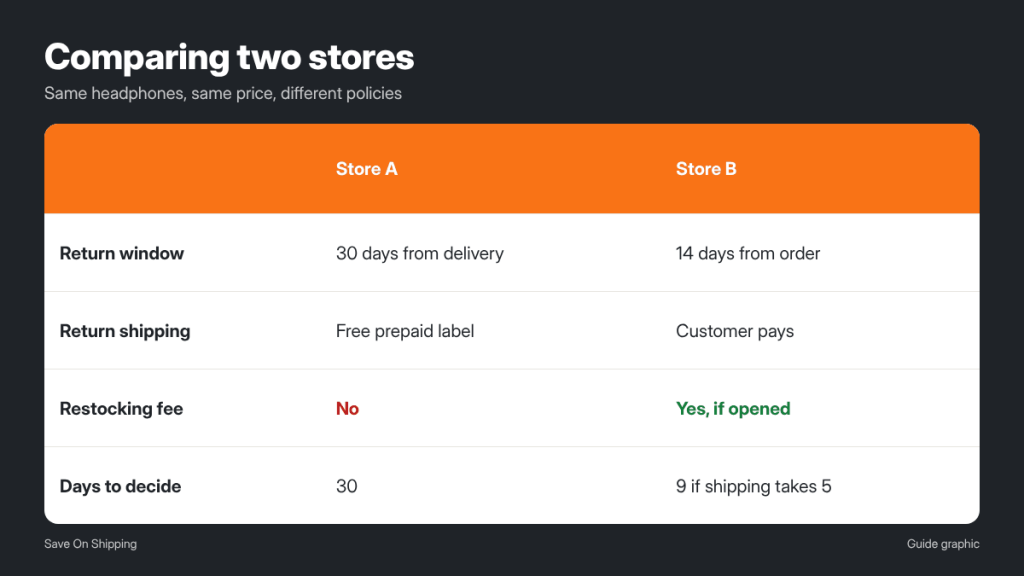
You are choosing between two stores selling the same headphones for the same price. Store A offers a 30-day window from delivery, free prepaid return labels and a refund to your card. Store B offers a 14-day window from the order date, return shipping at your expense and a restocking fee on opened electronics. If shipping takes 5 days, Store B gives you only 14 minus 5, or 9 days with the headphones in hand to decide. Store A is the safer purchase, even at the same price.
What to save at checkout
A smooth return starts the moment you buy. Keep these records together in an email folder or a note:
- Your order confirmation and order number.
- A screenshot or saved copy of the return policy on the day you purchased, since policies can change.
- The delivery date from tracking.
- The original packaging, tags and accessories, at least until the return window closes.
- Photos of the item on arrival if it looks damaged or defective.
Set a calendar reminder a few days before the return window ends. That way, if you decide to return the item, you will not be rushing to start the process at the last minute.
Before you send anything back
A five-question check before you click buy
If you only have a minute, answer these five questions from the policy page:
- How many days do I have, and does the count start at the order date or delivery date?
- Can I return it if I open or try it?
- Will I pay for return shipping or a restocking fee?
- Will I get my money back or store credit?
- Can I return it in a store or drop it off nearby, or does it have to be mailed?
If any answer is unclear, contact the retailer before you order, or save the chat or email reply as part of your records.
Starting the return
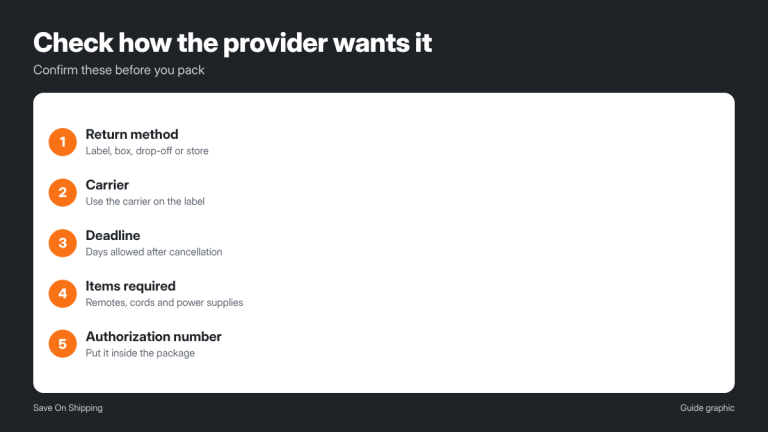
When you decide to return an item, start the return through the retailer’s site or customer service first. Most require a return authorization or return label before you ship. Pack the item securely, include any paperwork the retailer requests, and get a receipt or tracking scan when you drop it off. That proof matters if the retailer later says the item never arrived.
Frequently asked questions
Does a return window start on the order date or delivery date?
It depends on the retailer. Read the policy carefully, because the difference can be a week or more if shipping is slow.
Can a retailer change its return policy after I buy?
Policies can change over time, which is why it helps to save a copy from the day you purchase. If there is a dispute, a dated copy supports your case.
What does a restocking fee mean?
It is an amount deducted from your refund to cover the cost of processing a returned item. The policy should state when it applies and how much it is.
Are marketplace seller returns different?
Often, yes. Individual sellers may set their own windows and rules, though many platforms have baseline protections. Check both the seller’s policy and the platform’s.
Ready to send a return back?
Houston shoppers can bring prepaid returns to The Postal Spot’s package drop-off counter for FedEx, UPS, USPS and Amazon returns, and ask for a receipt before you leave.