How to Build a Holiday Shipping Budget That Holds Up
Holiday budgets usually cover the gifts, the food and the travel. Shipping is the line most people forget, and it is the one that grows fastest when time runs short. A few late packages sent by express service, an oversized box or two, and a surprise surcharge can turn a modest shipping plan into one of the biggest costs of the season.
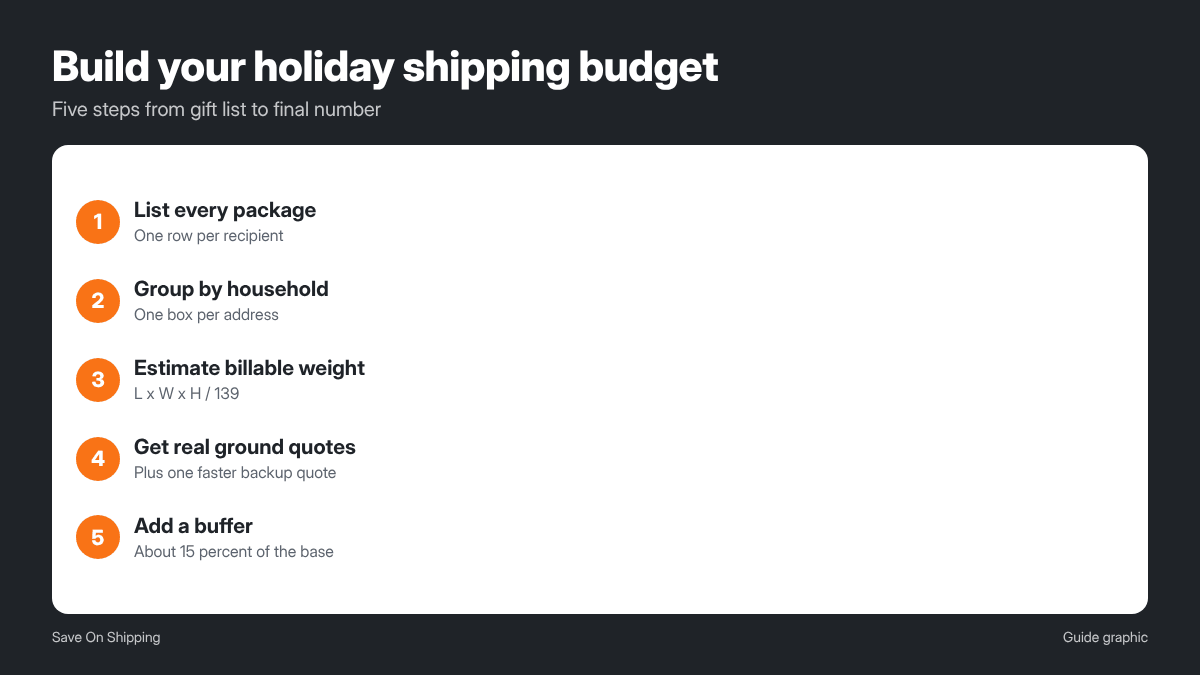
This guide shows you how to build a holiday shipping budget that holds up. You will list what you are sending, estimate billable weight, get real quotes, add a sensible buffer and then use a few planning habits to stay under it. The method works whether you are sending three gifts or thirty, and it takes less than an hour to set up.
Step 1: List every package before you buy anything
Start with a simple list, on paper or in a spreadsheet, with one row per recipient. For each, note:
- The recipient’s name and city or ZIP code.
- The gifts you plan to send them.
- Whether the gifts will ship direct from a retailer or from you.
- The date the package needs to arrive.
This list does two jobs. It shows you how many packages you will actually send, and it shows where you can combine gifts going to the same household. Many people discover they have more packages than they thought, which is exactly why a budget helps.
Group gifts by household
If your brother, his partner and their two children live at the same address, that is one package, not four. Grouping by household is often the single biggest saving in a holiday shipping budget, because one consolidated box usually costs less than several separate ones.
Step 2: Estimate size and billable weight
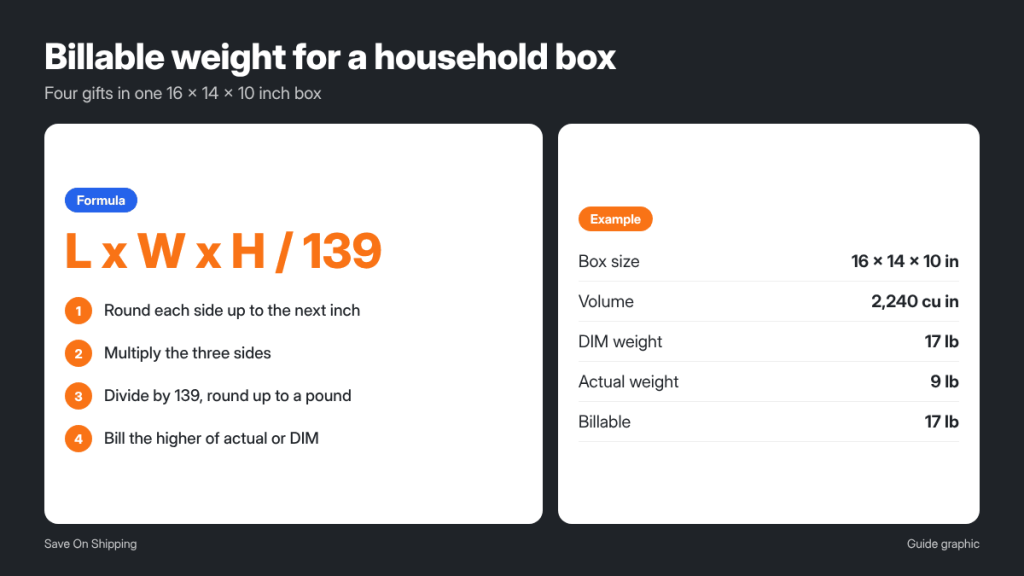
Shipping prices are based on billable weight, which is the higher of the actual weight or the dimensional weight. FedEx and UPS apply dimensional weight to all packages on standard rates. USPS applies it to packages larger than 1 cubic foot (1,728 cubic inches). All three use the same formula:
Length x Width x Height (in inches) / 139 = dimensional weight in pounds
Round each side up to the next inch and the result up to the next pound.
Worked example: one household box
You are sending four gifts to one household in a 16 x 14 x 10 inch box, with a packed weight of 9 pounds.
- Volume: 16 x 14 x 10 = 2,240 cubic inches.
- Dimensional weight: 2,240 / 139 = 16.1, rounded up to 17 pounds.
- Billable weight: 17 pounds, because 17 is more than 9.
If the same gifts fit into a 14 x 12 x 10 inch box, the volume is 1,680 cubic inches and the dimensional weight is 1,680 / 139 = 12.1, rounded up to 13 pounds. With USPS, that box is under 1,728 cubic inches, so it is priced on the actual 9 pounds. Planning the box size before you shop for wrapping makes your estimates far more accurate.
Step 3: Get real quotes, not guesses
Shipping prices vary with distance, size, weight and service level, so the only reliable number is a quote for your actual package. Use each carrier’s online rate tool, shipping software or a multi-carrier store to price every package on your list.
- Quote ground first. Ground is usually the lowest-cost option and is the baseline for your budget.
- Quote one faster option. Note the price of a two-day or three-day service as a backup in case you run late.
- Compare carriers. USPS is often competitive for small packages, while FedEx and UPS ground can be strong for larger ones.
- Include extras. Add the cost of any signature, insurance or declared value you plan to use.
Record the ground quote and the faster quote side by side on your list. The ground total becomes your base budget.
Step 4: Add a buffer for the unexpected
Holiday shipping rarely goes exactly to plan. A gift ends up bigger than expected, a package needs an upgrade because it was sent late, or a surcharge applies to a remote address. A buffer keeps those surprises from breaking the budget.
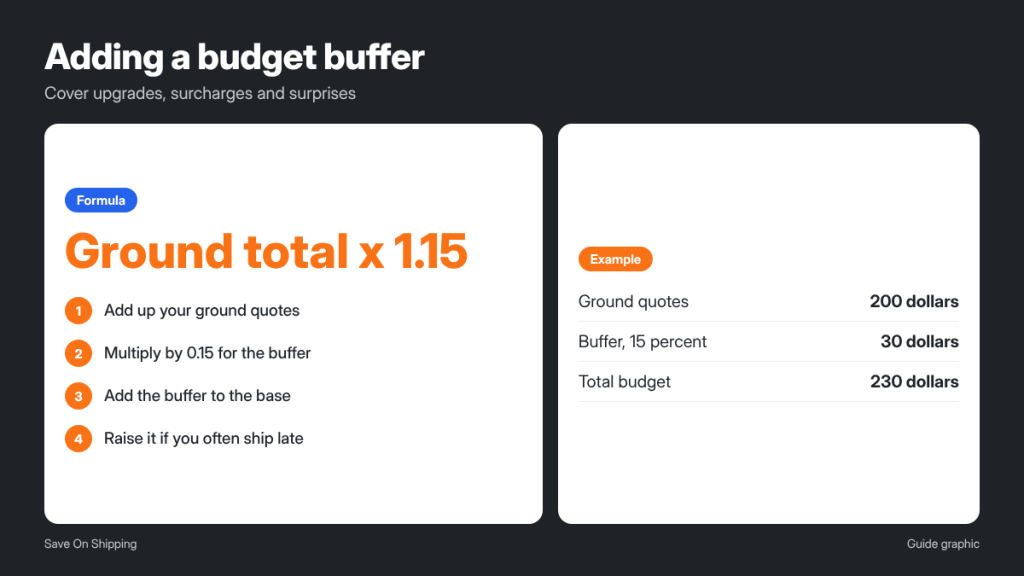
A simple approach is to add 15 percent to your base. For every 100 dollars of ground quotes, set aside another 15 dollars. If your ground quotes total 200 dollars, your buffer is 200 x 0.15 = 30 dollars, and your total shipping budget is 230 dollars. Adjust the percentage up if you tend to ship late or if your list includes large or heavy gifts.
Do not forget supplies
Boxes, tape, cushioning and labels are part of the shipping cost. Add a line for supplies, or reduce it by reusing sturdy boxes and using free carrier packaging where it fits the service you are using.
Step 5: Plan the timeline that protects the budget
Time is the biggest factor in whether you stay on budget. The later you ship, the more likely you are to need faster, more expensive services.
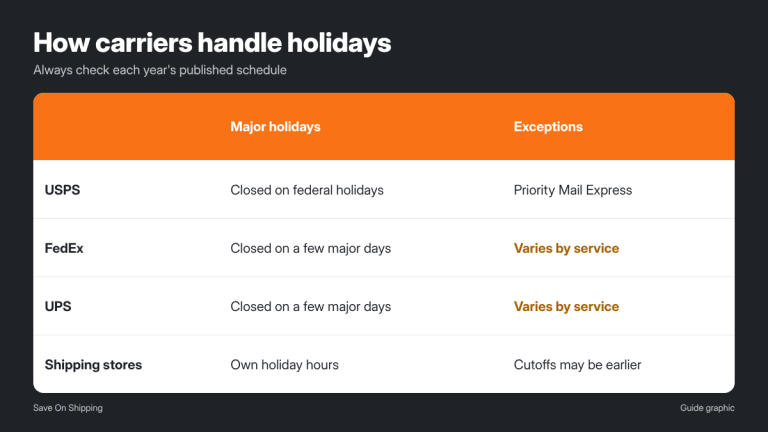
- Check carrier holiday deadlines for ground and faster services, and set your own target ship date a few days before the ground deadline.
- Order direct-ship gifts early so retailer processing time does not push you into upgrades.
- Batch your shipping days. Pick one or two days to pack and ship everything, rather than making many trips.
- Mark arrival dates on your list so you know which packages must go first.
- Review the list a week before the holiday and decide which, if any, late packages truly need a faster service.
Ways to stay under budget
- Consolidate by household wherever possible.
- Right-size every box to reduce dimensional weight.
- Use poly mailers for soft gifts like clothing and blankets.
- Ship direct when a retailer offers free shipping to any address.
- Consider gift cards or digital gifts for recipients far away or when time is short.
- Use Flat Rate for small, heavy items going long distances, after comparing it with weight-based pricing.
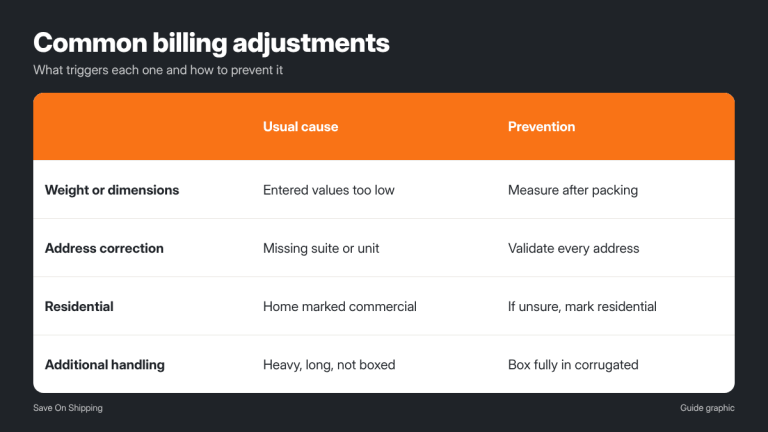
- Double-check addresses to avoid correction charges and returned packages.
Common budget busters to watch for
- Last-minute upgrades: overnight service for a gift that could have gone ground a week earlier.
- Oversized boxes: a gift box packed inside a much larger shipping box, billed by dimensional weight.
- Residential and remote area surcharges: unavoidable for some addresses, so include them in your quotes rather than being surprised.
- Address corrections: missing apartment numbers lead to extra charges and delays.
- Separate boxes to the same address: two packages to one household where one would have done.
Track your actual spending
As you ship each package, write down the actual cost next to the quote. This tells you in real time whether you are on track. If you are running over, you can adjust the rest of the plan, for example by consolidating more or switching a gift to a digital card. After the season, your list becomes a head start for next year’s budget, with real numbers instead of guesses.
A few columns are enough to make the list useful next year: recipient, box size, packed weight, service, quoted cost, actual cost and ship date. Add a short note when something went wrong, such as a late upgrade or an address correction, so you remember what to change. Over two or three seasons, this simple record shows which recipients are worth consolidating, which carriers worked best for your usual destinations and how early you really need to start.
Frequently asked questions
How much should I budget for holiday shipping?
There is no standard amount because prices depend on your packages and destinations. Get ground quotes for each package, add them up and add a buffer of around 15 percent.
What is the biggest way to save on holiday shipping?
Combining gifts for the same household into one right-sized box, and shipping early enough to use ground service.
Should I include packing supplies in my shipping budget?
Yes. Boxes, tape and cushioning are part of the true cost of each package, so add a line for them.
What if I go over my shipping budget?
Look at the remaining packages and consolidate, switch some gifts to digital or direct-ship options, and use ground service wherever the arrival date allows.
Want accurate quotes for your holiday list?
Bring your gifts to The Postal Spot for FedEx holiday shipping in Houston, where staff can weigh, measure and compare carriers so your budget is based on real numbers.